

Popl started life as a digital business card app and now sells itself as an AI badge‑scanning engine for in‑person GTM teams. iCapture sits inside Cvent’s trade show stack as an intelligent lead capture app, focused on pulling clean badge data wherever the organizer provides an API.
Two years into the acquisition, iCapture still ships features through Cvent’s release notes, but its direction increasingly tracks Cvent’s broader event management priorities rather than exhibitor‑side experimentation.
This article looks at where Popl and iCapture each win on badge capture, CRM sync speed, pricing, and program fit. We’ll also show you where a third option – Romify’s event revenue engine – fills the gaps.
Key Takeaways
- Popl suits sales, marketing, and field teams running variety-heavy calendars across mixed organizers.
- iCapture suits B2B marketers and sales teams running trade shows through Cvent's registration system.
- Popl's limitation: costs climb with more reps or high-volume shows, hurting dense calendars.
- iCapture's limitation: without Cvent or Expo Logic feeds, exhibitors fall back on manual uploads.
- Romify is the event revenue engine that turns conversations into pipeline and attributes it.
How Popl and iCapture Capture Leads at Events
Popl and iCapture both capture badges, but Popl scans any badge with AI enrichment while iCapture reads Cvent and Expo Logic registration data. Lead capture and lead retrieval describe two very different on‑floor realities:
- Lead retrieval traditionally means renting the organizer’s scanner, scanning badges, and waiting a few days for a CSV before anyone can follow up.
- Lead capture gives exhibitors their own app that turns badges, cards, and QR codes into qualified records the moment they’re scanned.
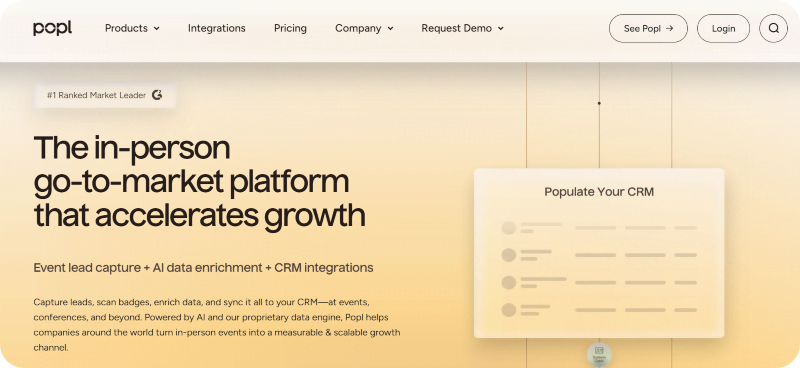
Popl sits firmly in the lead‑capture camp. It is an alternative to iCapture. Its universal badge scanner snaps a photo of any event badge or paper card, then extracts the name and company. It then uses AI enrichment to pull verified work email, phone, title, LinkedIn, and company data in seconds – even when there’s no organizer registration feed to tap.
Features for this lead-capture app include a universal badge scanner, business-card capture, offline scanning with sync on reconnection, AI enrichment across 20+ data partners, and native Salesforce and HubSpot connectors, backed by SOC 2 Type 2 and GDPR-aligned practices.
G2 reviewers call out how fast this feels in practice. You can scan, watch fields prefill, add a few qualifiers, and see the lead land in Salesforce or HubSpot before the prospect leaves the booth.
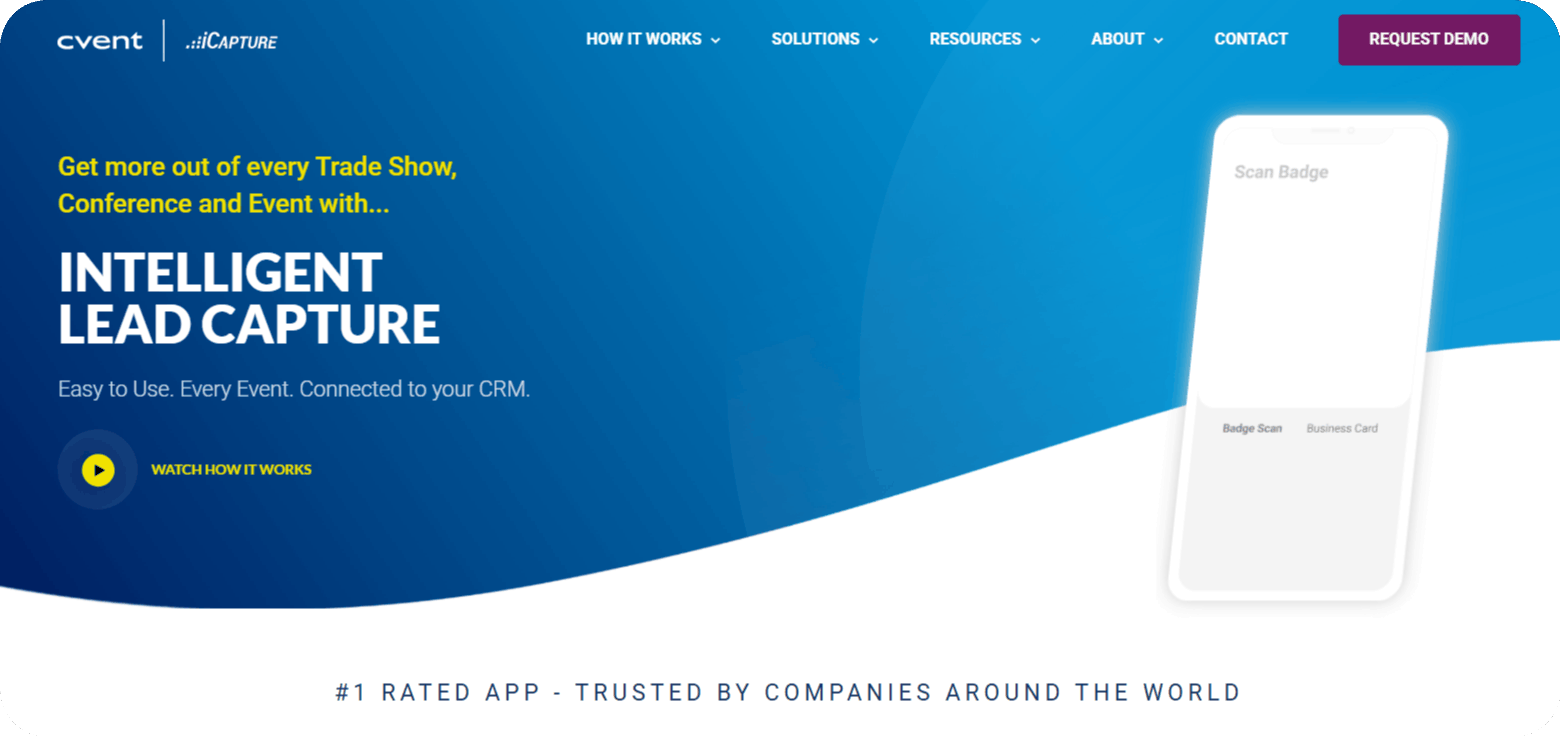
iCapture takes a different route. As part of Cvent, it specializes in structured badge data via direct APIs to Cvent and Expo Logic. This pulls the registration record behind the QR or barcode rather than inferring it.
At events without those integrations, exhibitors lose that advantage. Coverage at those events depends on the organizer's setup, and users report more dependence on manual uploads or organizer files. G2 feedback highlights solid CRM integrations and offline badge scanning. But it also notes that feature evolution now follows Cvent’s broader roadmap, which centers on organizer needs and meeting management.
Features for this lead-retrieval app include direct Cvent and Expo Logic API integrations, structured badge data pulled straight from registration, offline capture with later sync, and CRM syncing through REST APIs and Cvent's Integration Hub.
The best Popl and iCapture alternative
Meanwhile, Romify approaches the same problem as an event revenue engine, going beyond capture to attribute pipeline back to the event that produced it. Reps use the Romify App to photograph badges or scan business cards at any event. Romify AI then enriches and translates data on the spot, and qualified leads sync to Salesforce or HubSpot in minutes with routing ready for same‑day outreach.
How do Popl and iCapture compare on CRM Sync Speed and Data Enrichment?
Popl and iCapture both promise ‘CRM‑ready’ leads, but they take very different routes to get there – and the record your reps see in Salesforce or HubSpot shows it.
Popl leans hard on AI enrichment. Its waterfall engine runs each badge or card through 20+ data partners. It has an email find rate on badge scans and appends phone, title, LinkedIn, and firmographics before anything syncs.
In practice, that means when a rep opens Salesforce or HubSpot, they see a complete contact. It will have a verified corporate email, company profile, and tags from the capture flow, all ready for immediate routing and automation. Popl’s native connectors push those enriched leads into Salesforce, HubSpot, and other CRMs in seconds, with field mapping controlled in Popl’s own dashboard.
Historically, iCapture has relied on badge‑kit integrations to keep data clean, pulling official registration fields rather than guessing from partial scans. That makes the enrichment story very different – the quality of the record depends on what the attendee submitted during registration and what the organizer encoded on the badge.
iCapture syncs leads into Salesforce, HubSpot, and other systems via REST APIs and Cvent’s Integration Hub. This gives strong flexibility but typically involves more admin‑side setup and field mapping to line up badges, events, and campaigns.
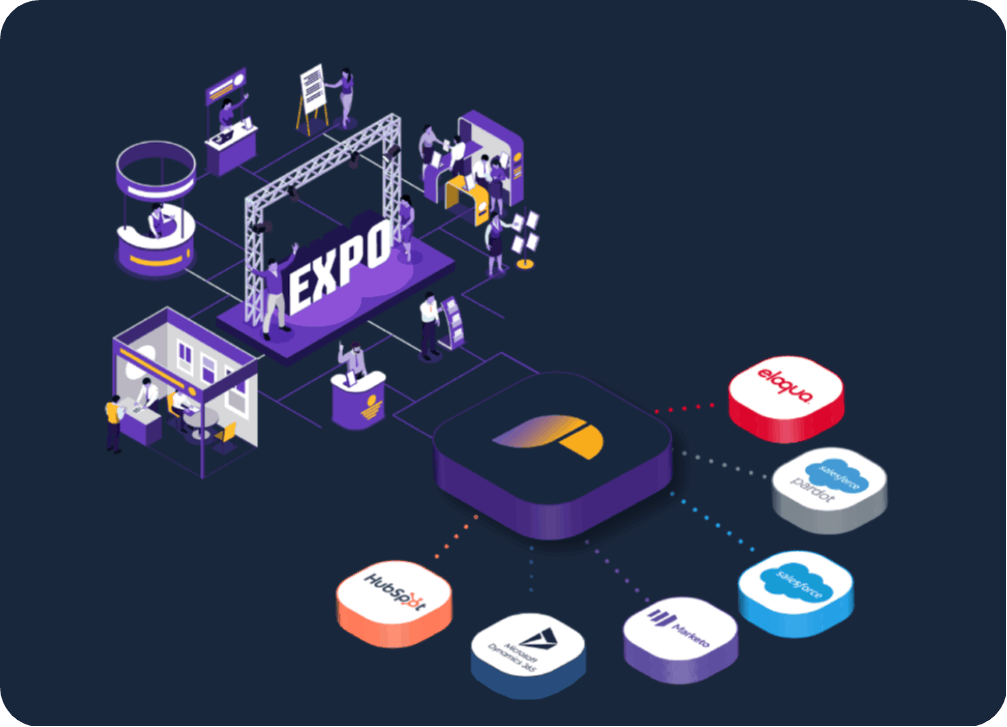
Popl's enrichment stops at the contact record, and iCapture's enrichment quality depends on what the attendee typed into a registration form. Neither ties that data to qualification or event-level reporting. Romify’s event revenue engine takes the enrichment‑first approach for exhibitors who care about speed‑to‑lead and reporting as much as raw contact data.
Romify AI captures badges and cards, enriches and qualifies in the app, then syncs leads into Salesforce or HubSpot within minutes.
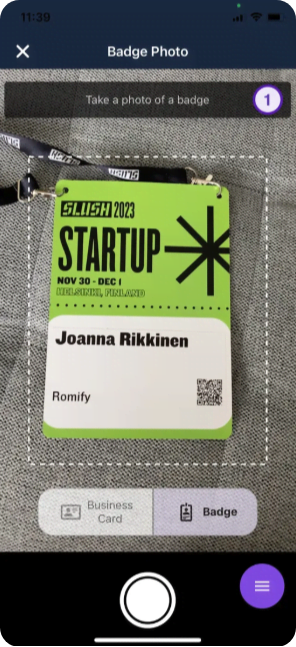
Romify Flows can be created in advance and reused – these are the qualification questions you wish to capture – so everything is at the touch of a button.
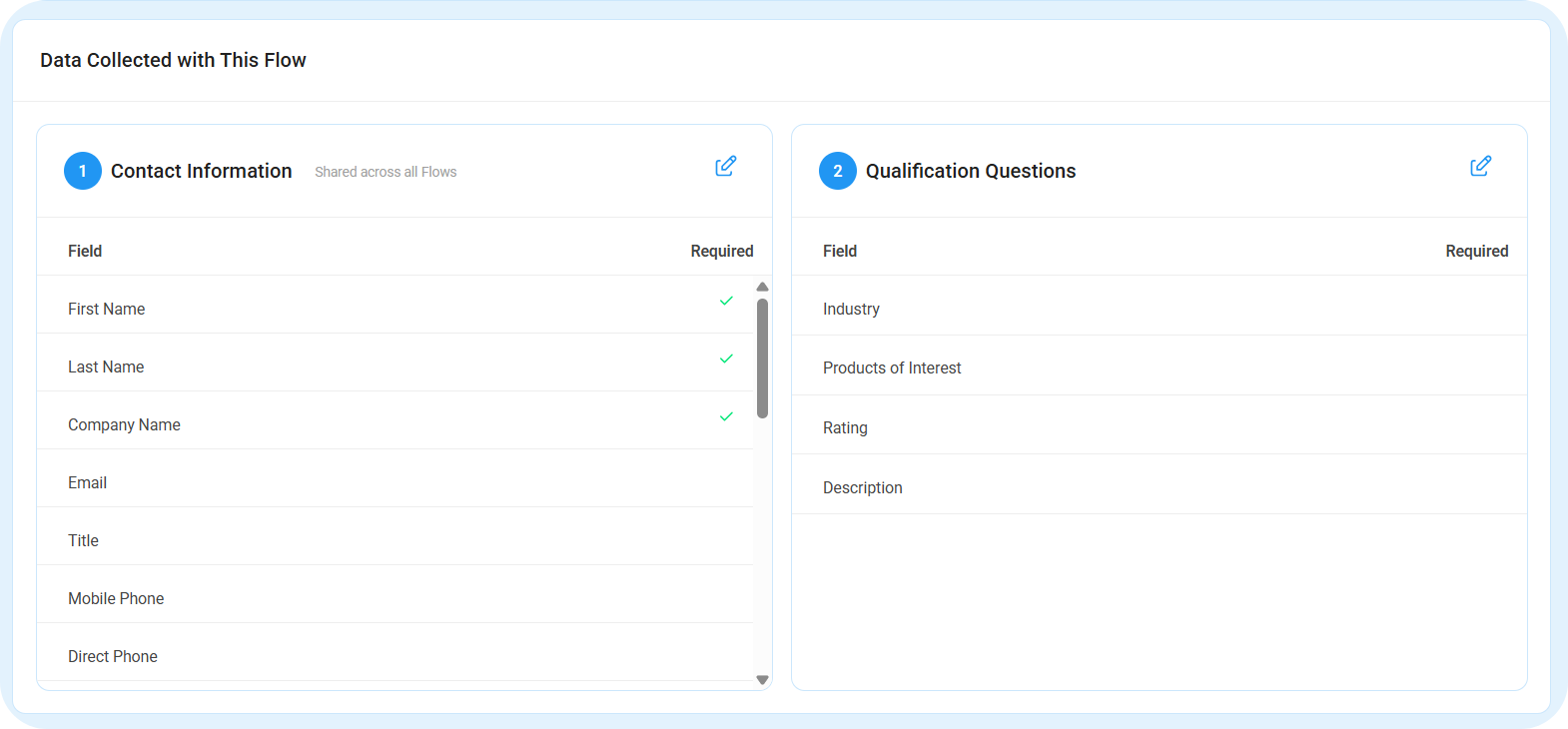
Email templates for hot, warm, and cold leads can also be prepared, meaning you can fire off a follow-up email a few moments after your prospect leaves the booth. With campaign attribution and next-step workflows ready to go, marketing leaders see a complete, routed record instead of a half-filled contact they have to fix later.
Pricing comparison: Per-Scan Model vs Flat Annual Fee
Pricing is where Popl and iCapture stop looking similar and start behaving like completely different bets for a 20‑event, 5,000‑scan year.
Popl’s public pricing focuses on individual and small‑team subscriptions. Pro sits at about $7.99 per user per month, with higher‑tier and team plans stepping up from there. Event lead‑capture plans for teams are quoted by sales and commonly reported in the $6,000/year range for smaller deployments, with per‑scan or volume‑based charges layered on top. That combo means your annual bill is a mix of seats and usage. Add more reps or hit a big flagship show with thousands of scans, and your effective cost per event climbs, especially if you’re running a dense calendar.
iCapture’s pricing is much flatter by design. Whether your team runs two events or twenty, the subscription stays the same. This makes the per‑scan cost drop sharply as you layer on more shows and larger booth programs. The trade‑off is clear – light event calendars risk overpaying, while high‑volume exhibitors can treat iCapture as a predictable line item rather than a variable GTM tax.
“Romify approaches pricing through event‑based tiers anchored by a pilot. Teams typically start with a $1,000 pilot for one event with unlimited users, then graduate into annual event bundles. For example, around $9,000 for roughly 20 events per year. Your budget lines up with how often you’re actually on the road, not how many scans you happened to rack up at one busy show.”
– Ben Jablow, Romify CEO
Popl or iCapture: Which Tool Fits Your Event Program?
Popl covers variety-heavy programs, and iCapture works only if your stack lives inside Cvent. But that framing only answers half the question. The real issue isn't which capture tool suits your calendar. It's whether a capture tool is enough once you need pipeline attribution across a full season of events.
Popl fits variety‑heavy programs – mixed organizers, different badge formats, a blend of trade shows, field events, and networking. Its AI‑powered universal badge scanner reads printed badges and business cards, enriches from name + company to full contact, and pushes leads into whatever CRM you’ve standardized on.
That makes it attractive for teams that care most about AI coverage, broad integrations, and keeping one workflow alive across every event – not just the Cvent‑managed ones. Popl captures leads offline and syncs on reconnection. It also backs its data engine with SOC 2 Type 2 and GDPR‑aligned practices.
iCapture works best when Cvent sits at the center of your trade show stack. If most of your program uses Cvent registration and badge kits, iCapture’s tight organizer integrations and flat annual fee can be compelling. Structured badge data flows straight from registration, and your finance team gets one predictable subscription regardless of event count.
iCapture also supports offline capture with later sync, which helps in convention centers where Wi‑Fi disappears the moment doors open. Public material focuses on functionality and integrations. Specific compliance certifications aren’t clearly documented, so buyers with strict security needs will want to push that question directly with Cvent.
Both tools are strong at lead collection, but neither is built to track event‑to‑revenue across mixed organizers, frequent shows, and complex routing.
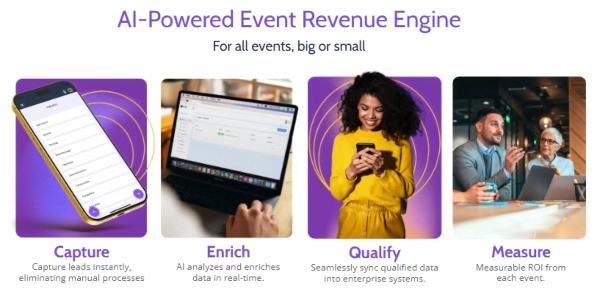
Romify is the event revenue engine for high-volume B2B teams that need pipeline attribution across many events. Romify captures leads at any event, qualifies them in conversation, syncs natively to Salesforce and HubSpot, and shows how each badge scan turns into pipeline through ROMI dashboards.
Pick Romify for High-Volume B2B Programs
Romify AI handles badge capture at any event, translates business cards in 60 languages, and enriches contact data, so records arrive in Salesforce or HubSpot ready for routing and attribution.
- We built Romify for B2B teams at roughly $10M+ ARR running 10+ events a year with mixed organizers, regions, and formats.
- One dedicated rep stays with you from the first demo through onboarding and live support, so you’re not explaining your playbook to a new contact every quarter.
- Implementation lands in under three hours across three short onboarding calls, so the new system feels more like connecting a modern app than rolling out enterprise software.
See what Romify can deliver at your next event – request a demo today.