

Many reps quit the follow-up game early because they worry they’re being annoying when they don’t hear back. In reality, a lack of response usually comes down to the quality and timing of that first touchpoint, not the fact that you followed up.
Most B2B deals need five or more follow-ups, yet many reps disappear after one or two, which means they’re checking out long before buyers are ready to decide. It’s a longer game than most B2C cycles, and the real challenge is sending follow-ups that actually earn a reply and keep the conversation moving. Those messages need to be timely and specific, anchored in your last interaction rather than another vague ‘just checking in’ nudge.
In this guide, you’ll get a complete B2B follow-up cadence – day-by-day channel assignments, message frameworks for each touchpoint, and a clear endpoint, so you know exactly how to stay persistent without crossing the line into annoyance.
5 Key Takeaways
- Speed-to-lead defines whether your follow-up feels like a continuation of the conversation or an interruption.
- If you dread ‘being pushy’, upgrade message quality first – specific, relevant touches almost never feel intrusive to serious buyers.
- The strongest cadences behave like a story arc, each touch adding a new chapter and not repeating the same opening line.
- Multi-channel doesn’t mean showing up everywhere – choose two or three channels your buyer already uses and coordinate them with purpose.
- For event teams, Romify’s event revenue engine gives you the best start possible by kicking off Day 0 follow-up automatically from the booth.
Why Speed Wins the Follow-up Game
Speed, persistence, and timing turn follow-up from guesswork into a repeatable advantage. The faster you reply, the more your message feels like a natural extension of the original conversation. Your contact is already ‘warm’, so keep them that way!
The 5-Minute Response Window
Responding within five minutes of a new inquiry makes you much more likely to qualify that lead than waiting longer. After the first 10 minutes, qualification odds fall off a cliff because the prospect has already moved on mentally.
Getting back to a new lead within an hour still puts you structurally ahead of most B2B teams, who often wait days for organizer files or manual list uploads before anyone reaches out.
How Many Follow-ups Actually Convert Leads
Most reply rates spike on the first follow-up – as opposed to the initial cold email – because the prospect now recognizes your name and context.
A good benchmark is two to three follow-up emails before your rejection risk climbs, with a total cadence of five to seven touches across email, phone, and LinkedIn over two to three weeks. That rhythm keeps you present without hovering in their inbox every 24 hours.
The Best Days and Times to Follow up
In this MIT study, mid-week mornings (8-9am in the prospect’s time zone), and late afternoons (4-5pm) outperform other windows for contact and qualification rates.
“Early afternoon is consistently the weakest slot, when inboxes are full and attention is low. Treat these as smart starting defaults to A/B test against your own audience rather than fixed rules, because sector, seniority, and buying cycle all nudge the ideal timing.”
– Ben Jablow, Romify CEO
Why Most Reps Give Up Too Soon
Top performers often secure meetings in around five touchpoints, while more typical reps need closer to eight. The quality gap usually comes down to burning early messages on vague check-ins. Most people stop before they hit either number because they feel pushy, even though the prospect barely remembers hearing from them.
The real line between persistent and annoying is whether each message adds something new – a tailored resource, a call summary, or a fresh angle on their problem. ‘Checking in’ style generic follow-ups give prospects little reason to get back to you.
Your Day-by-Day Lead Follow-up Cadence
A good cadence feels like a continuation of the first conversation. Think in days, channels, and purpose – what you send, where you send it, and why it deserves a reply.
Day 0: Your First Touch
Send a short, personalized email within five minutes of the conversation while details are still fresh on both sides. Reference a specific point they raised, deliver any resource you promised, and explain what will happen next in one clear sentence.
Aim to keep your email to 75-100 words so it gets read on mobile, not saved for later and forgotten. Personalized subject lines, using their name and a concrete detail from your chat, consistently beat generic openers. For event teams, the real advantage is removing the CSV delay, so this first touch happens on Day 0 instead of Day 3.
Romify enables you to easily build email templates for different lead types (e.g. hot, warm, cold), so all your reps have to do is fill in the gaps and send. Here’s a template example from Romify’s dashboard:
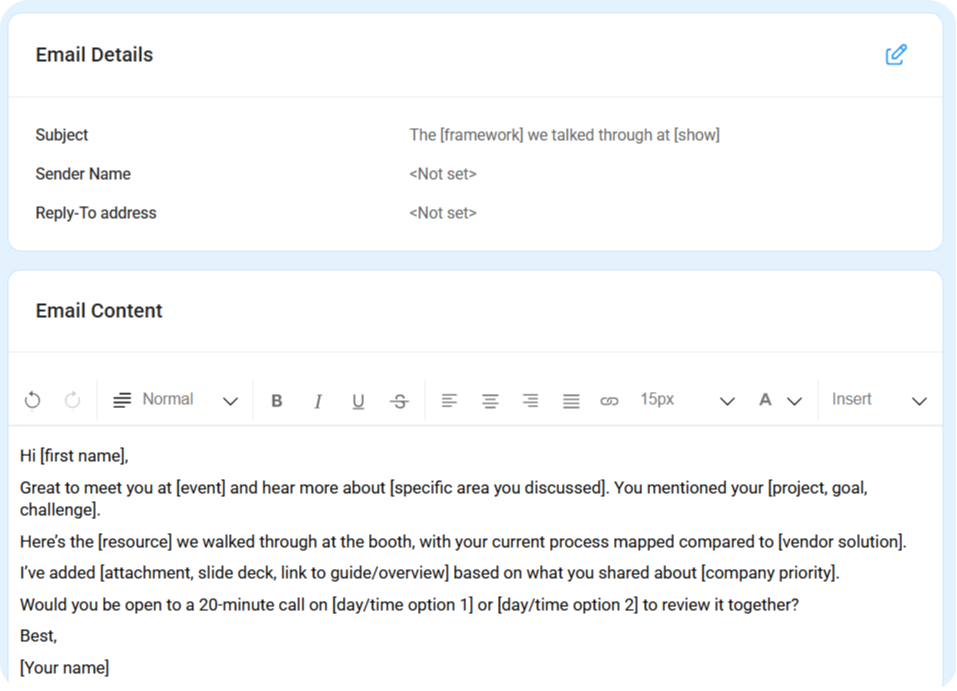
This approach closes the gap between booth conversations and CRM-ready, tailored first touches. It turns every badge scan into a Day 0-ready record with context, so the follow-up you want to send in five minutes is actually possible.
Days 2 to 3: Lead with Value
Your next touch should give your prospect something useful with no immediate ask. Send a case study, benchmark, or article that maps directly to the challenge they outlined, and explain in one line why you picked it for them.
Anchor the message to your Day 0 email, so you’re advancing a thread rather than starting a new one from scratch. This is where many reps fall back on ‘just checking in’, but leading with a tailored resource instead is where you stand out.
Days 5 to 7: The Multi-Channel Check-in
Now widen the lens and add channels. Email stays your workhorse for links and attachments, while LinkedIn works best for short, conversational nudges that reference the value you’ve already shared. LinkedIn messages earn roughly a 10.3% response rate versus about 5.1% for cold email, so it deserves a real place in your cadence.

When you make a phone call, state your purpose in the first 10 seconds and tie it back to your earlier interaction so it doesn’t feel like a cold interruption.
A reliable pattern is a hybrid approach – call first, leave a brief voicemail, then send a same-day email referencing the call and asking which channel they prefer going forward. That way, you’re doing everything you can to make it as easy as possible for your prospect to get back to you.
Days 10 to 14: The Break-up Email
If you’ve hit five to seven touches over two to three weeks with no response, it’s time for the break-up email. Before you close the loop, give them one specific recommendation or point of view based on what you know about their situation, so this message is the most valuable in the entire sequence.
With the cadence mapped out, the next question is how to execute it without adding hours of manual work after every event.
How Romify Supports Faster Follow-up
Event leads go cold while teams chase CSVs, fix fields, and guess who to call first. Romify cuts out that lag so Day 0 follow-up happens while the conversation is still fresh, with context and routing built in instead of bolted on after the event.
Capture Context That Personalizes Every Message
Romify Flows collects qualification answers during the booth conversation, so reps capture what the prospect cares about while they’re still standing there.
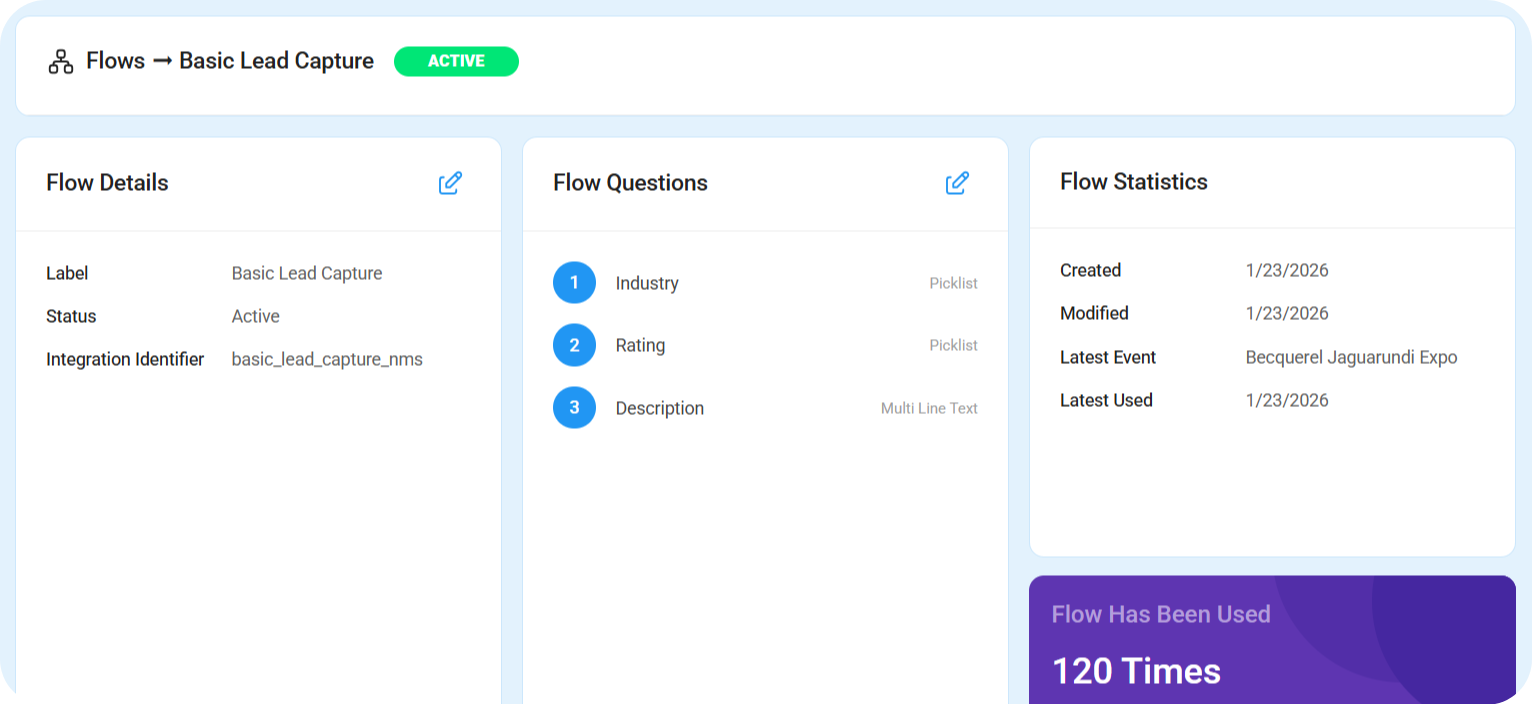
Those answers drive the automated first email, which mirrors the topics they raised instead of sending a generic ‘great to meet you’ note. Personalization happens at the moment of capture, instead of three days later during a rushed data-entry session.
Keep Your Cadence Consistent Across Touchpoints
CRM sync triggers a first-touch email within about 30 seconds of capture and creates follow-up tasks in Salesforce and HubSpot, so nothing slips between systems.
Romify handles Day 0 and the CRM handoff, while the next touchpoints run in the tools your reps already use, with clean records and clear next steps. That structure keeps your cadence consistent – you’re no longer relying on memory and scattered notes.
Use Enriched Data to Personalize Outreach
Romify AI enriches each record with work email, phone number, LinkedIn profile, and company details that basic badge scans often miss.
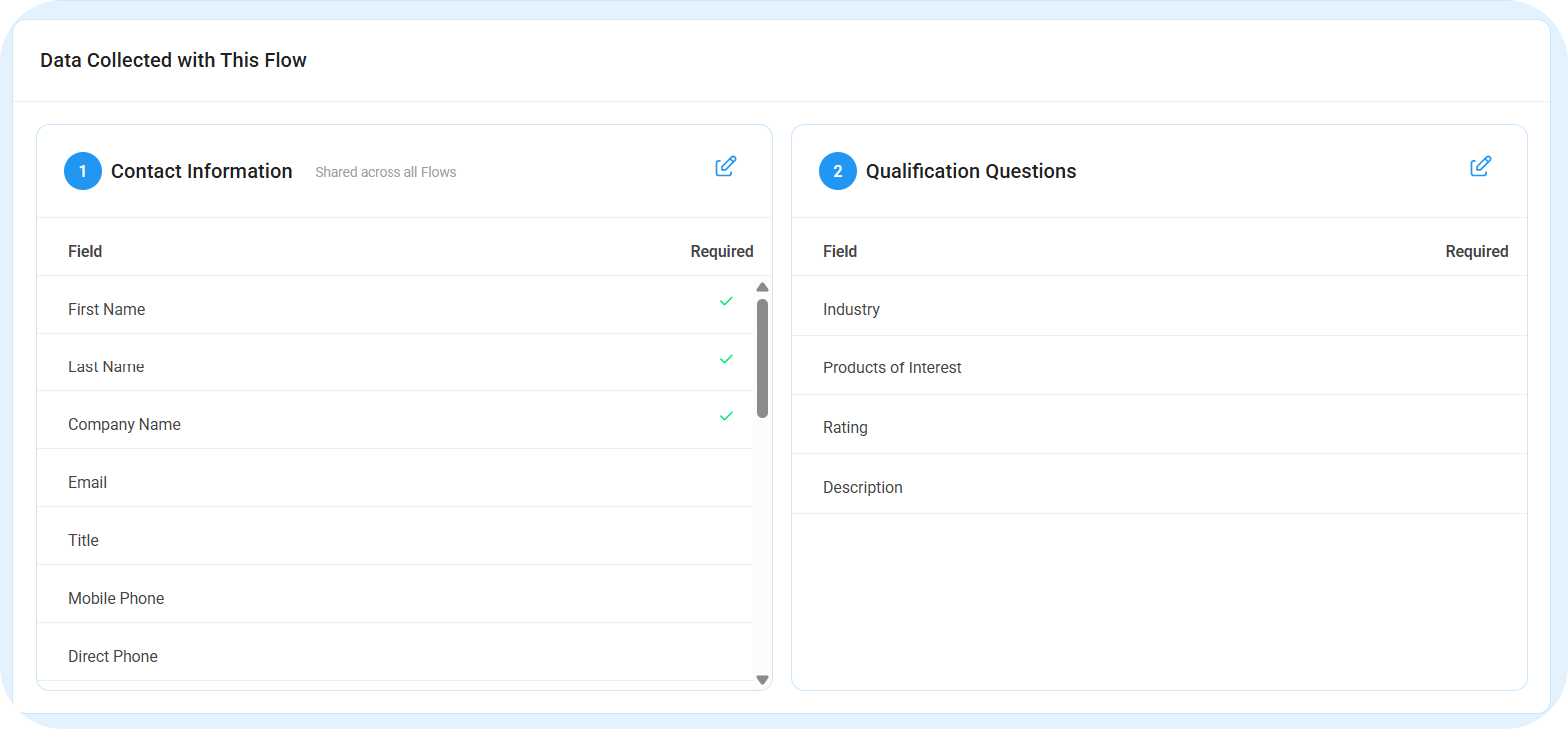
Reps get the multi-channel contact points they need for email, phone, and social touchpoints without doing manual research after the show. Enrichment focuses on B2B contacts with business domains so your database stays cleaner and more targeted.
Know Who to Follow up With First
Not every event lead deserves the same depth of effort, and Romify makes that visible. Qualification data from Flows helps sales teams separate high-fit, high-intent prospects who merit fully custom outreach from those better suited to a lighter, templated sequence.
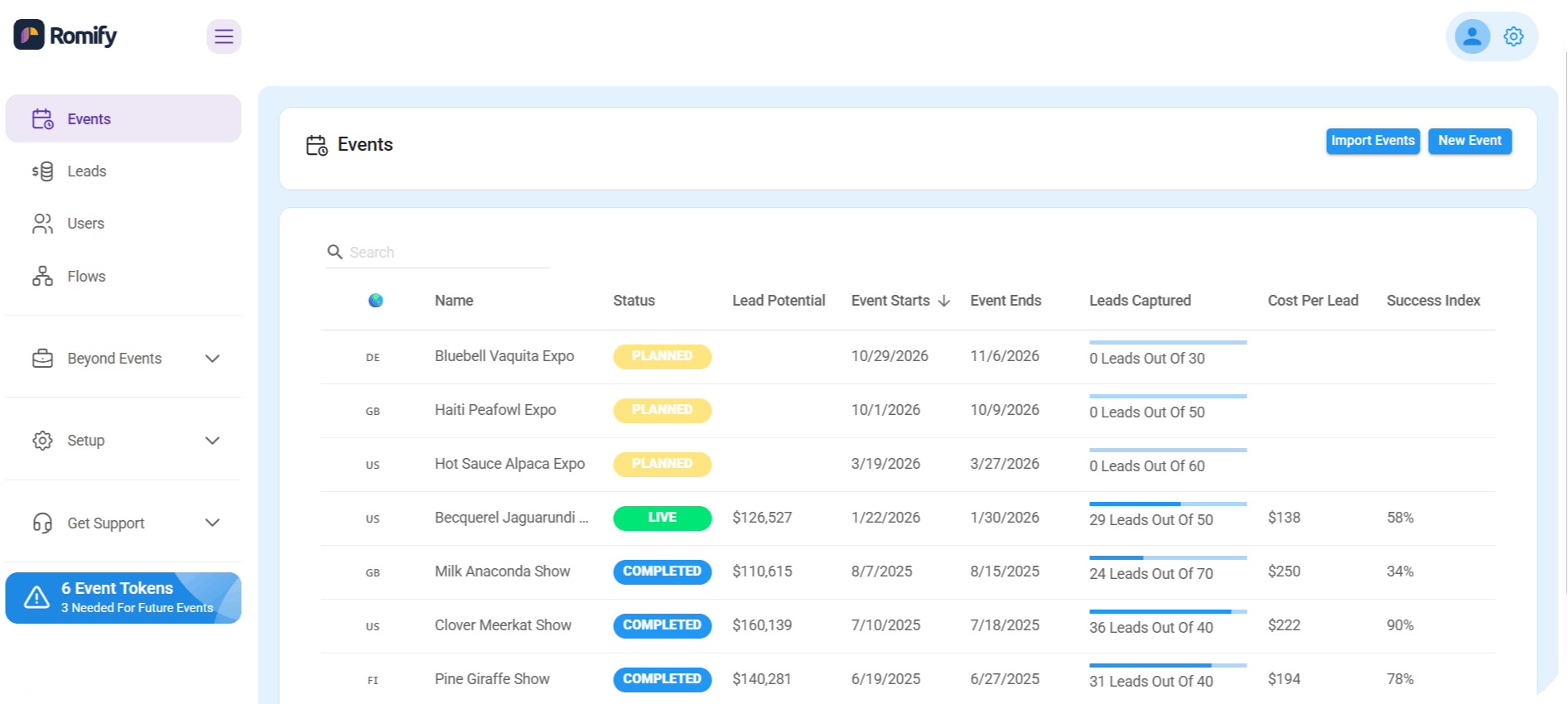
In the Romify Hub, marketing and sales leaders see per-event lead quality and engagement trends, so they can decide where to invest follow-up time and which shows truly feed the pipeline.
Putting Your Follow-up Cadence to Work This Week
Improving your lead follow-up doesn’t require a complete overhaul. You simply need a clear sequence to follow:
- Set up a Day 0 trigger so every new lead gets an immediate, personalized first-touch without manual effort.
- Draft short frameworks for each stage – Day 0, value follow-up, multi-channel check-in, and break-up email, and save them where reps can grab and adapt them quickly.
- Pick a tracking method, CRM tasks, sequences, or even a spreadsheet, and use it on your next batch of leads to see where you lose momentum.
- If you’re running events, make sure your lead capture app feeds your CRM in real time so the cadence starts at collection.
If you want that cadence to start the moment a badge is scanned instead of when a CSV finally shows up, take a Romify demo today and see how real-time routing makes this playbook a reality.